
Your Denture Options
Full dentures replace a whole arch. Partials fill selected gaps. Implant-supported dentures attach to implants when you want less movement. We measure the bone first so the recommendation matches what your mouth can support.
Partial Dentures
For patients who still have healthy natural teeth, a partial fills the gaps while working around what's already there. Clasps or a precise attachment hold it in place, and the natural teeth still do most of the chewing.
Implant-Supported Dentures
Anchored to implants rather than resting on the gums. They don't slip, they don't need adhesive, and they help preserve the jawbone underneath.
Adjusting to Dentures
The first couple of weeks take some getting used to — eating and speaking feel different at first, and that's completely normal. We schedule follow-ups to adjust the fit, because a denture that isn't adjusted properly is a denture you won't wear.
Over time your jaw changes shape, so dentures need periodic relining. Keeping up with those appointments is what separates a comfortable denture from a frustrating one.
Daily Denture Care
Take the denture out at night so the gums can rest, and soak it in a cleaner made for dentures rather than hot water or bleach. Brush it over a folded towel so a drop does not crack it on the sink.
Sore spots in the first weeks are common and are fixed by adjusting the denture, not by leaving it out until the appointment. Wear it the day you come in so we can see the red mark and trim the right place.
Full Dentures
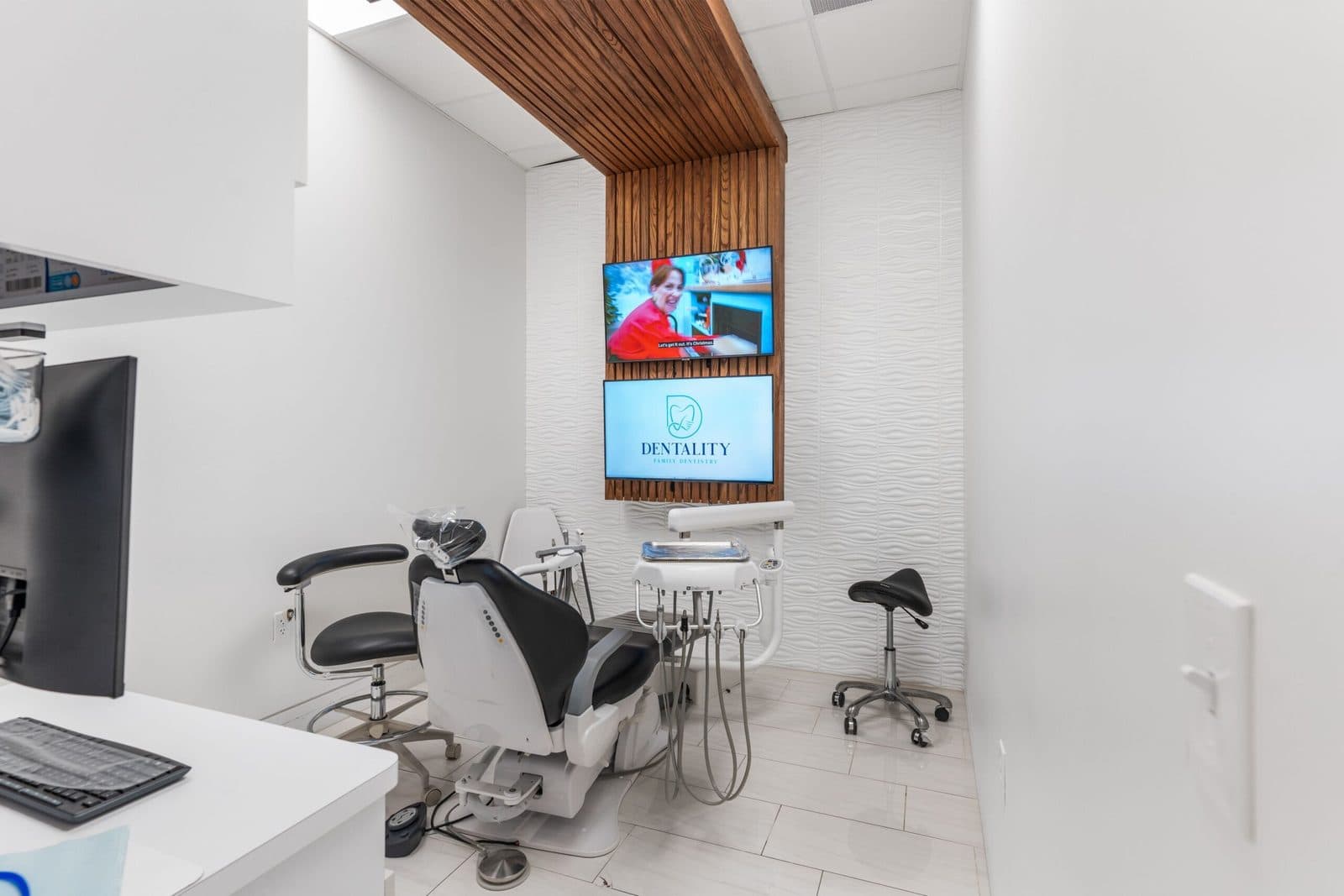
A complete replacement for an entire upper or lower arch, custom-shaped to your mouth for the most comfortable, natural-looking fit we can achieve. A try-in visit lets you see the tooth position and ask for changes before the denture is finished.
Frequently Asked Questions
Will people be able to tell?
Can I eat normally?
Should I consider implants instead?
Let's Find the Right Fit
Book a consultation and we'll go through the options and what each one costs.